The promise was ambitious: replace the old health insurance system with a more responsive, technology-driven model that would make access to healthcare easier for millions of Kenyans.
But nearly two years into the transition from the National Health Insurance Fund (NHIF) to the Social Health Authority (SHA), healthcare providers in Western Kenya say the reality on the ground remains far removed from that promise.
They want faster claims processing. They want clearer communication. They want a system that works when a patient is standing at the hospital counter — and they want to be treated with dignity when they seek payment for services already provided.
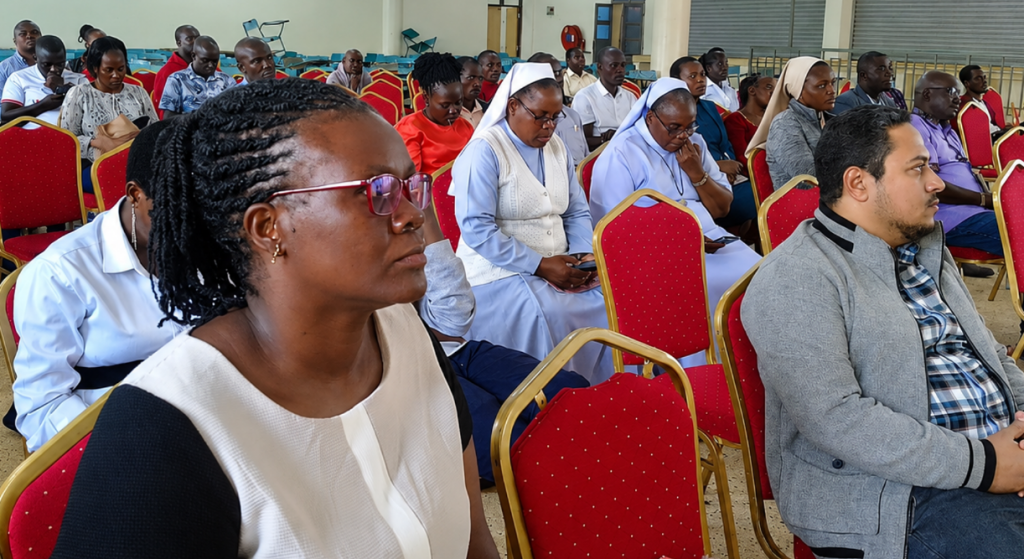
These concerns dominated a stakeholder engagement forum held at Masinde Muliro University of Science and Technology on Thursday, August 6, bringing together SHA officials, healthcare facility owners and service providers from Kakamega, Bungoma, Vihiga and Busia counties.
The meeting came as SHA prepares to enter a new contracting cycle covering 2026 to 2029.
For the providers, it was an opportunity to put their frustrations on the table.
For SHA, officials said, it was an opportunity to listen before the next contract is finalised.
“We admit that we have not been doing proper engagement in the past,” said Dan Kabui, a Machakos county SHA manager.
Kabui said the authority would examine the challenges emerging from the current 2024–2026 contract and assess the roles played by different stakeholders in the health insurance system.
“We will look at the current contract and its challenges,” he said, adding that SHA would also examine the challenges service providers face in dealing with other actors in the health sector.
The admission set the tone for a meeting in which providers repeatedly described a relationship with SHA that they said had become increasingly strained.
When an approved patient becomes an unpaid claim
One of the most consequential complaints was about rejected claims.

Lugulu Mission Hospital CEO, Samuel Mukhwana during the SHA stakeholder forum in MMUST
Samuel Mukhwana, the chief executive officer of Lugulu Mission Hospital, presented a raft of grievances on behalf of healthcare providers.
He said facilities sometimes provide treatment after a patient's SHA status has been confirmed and the system has accepted the patient. The patient's account may also have the required funds.
The problem, he said, can emerge only after the patient has received treatment and left the facility.
The facility then submits its claim — only for SHA to reject it.
That leaves hospitals with a difficult choice: absorb the cost or attempt to recover money from a patient who has already been treated and gone home.
For facilities operating on tight margins, providers said, repeated rejected claims can translate into significant financial losses.
The concern goes beyond a technical failure. It touches on the fundamental relationship between an insurer and the healthcare providers expected to deliver care on its behalf.
Providers called on SHA to treat them with dignity when they raise claims and to provide clearer explanations when claims are rejected.
They also sought greater clarity on how and when funds are disbursed.
A call centre that can leave providers waiting
Another recurring complaint was the time taken to resolve problems through SHA's support channels.
Providers said some technical and administrative problems remain unresolved for extended periods even after being reported through the authority's official channels, including the 147 toll-free line.
Some participants said their complaints had eventually been resolved after days, weeks or even months.
Others said they had experienced situations where they remained on the telephone for hours while seeking assistance.
One participant said a provider could wait for as long as five hours for a response, even when the matter being reported involved an urgent patient-care issue.
The providers proposed decentralising call-centre services to SHA branches so that facilities could obtain assistance closer to where they operate.
For a health facility dealing with a patient in real time, they argued, a delayed response is not merely an inconvenience. It can hold up service delivery.
When the system hangs, patients wait
The complaints were not limited to payments.
Healthcare providers also pointed to technical failures within the SHA system.
Facilities need to access the platform to confirm whether patients are active members, establish their eligibility and process services.
But providers said the system can become slow or hang, particularly at critical moments.
The result can be queues, overcrowding and delays in serving patients.
In rural facilities, where resources are already limited, providers said such delays can place additional pressure on health workers and patients.
Geoffrey Kones, Deputy Director of ICT at SHA headquarters, acknowledged the need to address such experiences.
“We are here to see how we can engage you in the next contracting cycle,” Kones said.
He said the authority was collecting feedback from providers to understand the challenges they were experiencing.
“That is why we are here to take notes and improve our service delivery,” he added.
The meeting was therefore not simply a complaint session. It was part of SHA's effort to gather stakeholder feedback on the draft 2026–2029 contract and review providers' experience under the current contracting cycle.
The 'digital superhighway' that is consuming more paper
Perhaps one of the most striking complaints concerned a contradiction at the heart of SHA's digital promise.
The new health insurance system was presented as a modern, technology-driven platform.
Yet providers said they are handling more paperwork than before.
One provider from Busia County said his facility now spends heavily on printing documents that must subsequently be scanned and uploaded into the system.
“I use more than 25 reams of papers per month, up from five reams of papers in the past. Why then is this called digital?” he asked.
The complaint illustrates a broader frustration among providers: digitisation, they argued, should reduce administrative work rather than simply transfer paperwork from one stage of the process to another.
Printing, scanning and uploading documents not only consumes time but also adds an operational cost for facilities.
For smaller and rural facilities, such expenses can be significant.
Providers say SHA is changing without telling them
Communication emerged as another fault line.
Providers complained that SHA sometimes introduces changes to its system, requirements or processes without adequately informing healthcare facilities beforehand.
Some said they only discover that something has changed when they log into the system while attempting to serve a patient.
For facilities dealing with patients at the grassroots, providers said, this creates uncertainty.
A change that may appear administrative at headquarters can become a practical problem at a hospital reception, consultation room or claims office.
Providers therefore called for more structured and timely communication whenever SHA introduces new requirements or changes how its platform operates.
The concerns also extended to public awareness.
'People don't know how SHA works'
Healthcare providers said public awareness of SHA remains low in some rural communities.
They said some residents know the authority largely through political debate, while others remain unclear about registration, payments, beneficiaries and how the system works.
This knowledge gap can place additional pressure on healthcare facilities, which are often forced to explain the insurance system to patients while simultaneously providing medical care.
Providers called for more public sensitisation, particularly in rural areas.
They also raised questions about how beneficiaries should be added to accounts and how the system should accommodate vulnerable groups.
One particularly difficult case involves children living in orphanages or children rescued without clear information about their parents.
The providers questioned how such children can be enrolled when the system requires documentation and parental information that may not exist.
For them, an insurance system designed to expand healthcare access must also have practical solutions for people whose circumstances do not fit neatly into standard documentation requirements.
Ambulances: one rate does not fit every road
Ambulance services emerged as another major concern.
Under the current arrangement, providers said SHA does not generally pay for ambulance services in the way they would expect for insured healthcare.
Officials indicated that the authority is working towards a system in which patients can access ambulance services and SHA can pay for them.
But providers cautioned against adopting a uniform reimbursement model that ignores Kenya's geographical realities.
They cited a proposed reimbursement of KSh4,500, together with an additional amount based on kilometres covered, as an example of an approach that may not adequately reflect the actual cost of transporting patients.
A referral between two facilities in an urban area, they argued, cannot be compared with an emergency referral from a remote facility where an ambulance has to navigate steep, rough or poorly accessible terrain.
Mukhwana and other providers cited facilities in areas such as Mount Elgon, where ambulances may require four-wheel-drive vehicles and consume substantially more fuel while navigating difficult terrain.
Their argument was straightforward: distance alone does not determine the cost of an ambulance journey.
Terrain, geography, road conditions, fuel consumption and the type of vehicle required all matter.
Providers therefore want the reimbursement model reviewed to reflect those realities rather than applying a uniform rate across fundamentally different environments.
The NHIF comparison that refuses to disappear
Throughout the engagement, providers repeatedly compared SHA with its predecessor, NHIF.
For some, the comparison was not nostalgic. It was about reliability.
Several participants argued that NHIF was more predictable and efficient in certain aspects of service delivery.
The comparisons underline the scale of the expectations placed on SHA.
The authority inherited not only NHIF's mandate but also the public's expectations for an insurance system capable of paying healthcare providers reliably while expanding access to care.
Providers now want SHA to demonstrate that the new system can do more than change the name and technology behind health insurance. They want it to work.
A contract at a critical crossroads
The timing of the engagement could therefore prove important.
SHA is preparing for the next contracting cycle, and providers have now placed their concerns directly before the authority.
Kabui said SHA would review the existing contract, its challenges and the roles of different stakeholders as it prepares for the next phase.
Kones, the deputy ICT director meanwhile, said the authority was using the engagement to collect feedback and improve service delivery.
The significance of the meeting lies partly in the fact that SHA officials did not dismiss the concerns. They listened and took notes.
And, according to the officials, the feedback will inform improvements to the next contracting cycle.
But for healthcare providers, promises will ultimately be measured not by the number of meetings held, but by what happens after the meeting: A claim that is paid on time, a technical problem resolved before it disrupts patient care, a call answered before an emergency becomes a crisis, and a system change communicated before a facility discovers it by accident.
It will also be measured when an orphaned child is enrolled without being trapped by documentation requirements and when an ambulance reimbursement model that recognises that healthcare in Kenya does not happen on identical roads or under identical circumstances, is adopted.
That is where the success of SHA's next chapter will be tested.
The stakeholder meeting at MMUST may have opened the conversation.
The real test will be whether the concerns raised in that room make their way into the 2026–2029 contract — and, ultimately, into the experience of the patient standing at a hospital door.